
What Magnet Fishing Involves
Magnet fishing is an outdoor retrieval activity, but its results depend on the material and position of submerged objects. Canals and rivers contain mixtures of metal, sediment, and nonmetal debris, so a magnetic catch represents only a partial sample. Knowing what a fishing magnet responds to helps set realistic expectations about what may be recovered. The key distinction is between magnetic attraction and the practical possibility of bringing an object back.
The Basic Idea
Magnet fishing is the recovery of submerged objects using a fishing magnet secured to a rope. Unlike a hook baited for fish, the magnet works through magnetic attraction: its field pulls on ferromagnetic material when the magnet comes close enough to make contact. The rope connects the magnet to a person at an accessible position, carrying the force needed to bring an attached object out of the water.
A neodymium fishing magnet is commonly used because it produces strong attraction for its size, but even a powerful magnet cannot pull an object it never touches. Water depth, an object’s position, and access to the water affect whether contact is possible. An item may lie beyond reach, be covered by sediment, or remain caught against the bottom. Magnet fishing is a selective retrieval activity, not a way to scan or clear an entire riverbed. Recovery depends on both magnetic contact and a route to bring the attached object within reach.
What Magnets Can Retrieve
A fishing magnet attracts ferromagnetic materials, especially iron and many common steels. This includes objects made largely from iron or steel, such as some tools, fasteners, and metal fragments. Attraction depends on the material at the contact point, not an object’s appearance. Aluminum, copper, brass, gold, and silver are not ferromagnetic, so a solid object made only from these metals will not be pulled directly by the magnet.
Stainless steel varies by grade: ferritic and martensitic grades are generally magnetic, while many austenitic grades are weakly magnetic or effectively nonmagnetic. A mixed-material object may attach if a steel or iron part contacts the magnet, even when its main body is aluminum or wood. Conversely, a small magnetic component may not hold an object securely. An otherwise magnetic object can also remain unreachable if it is buried, wedged in place, or beyond the line’s reach. A successful pull confirms magnetic material within reach, not that every metal object nearby can be recovered.
Equipment and Preparation
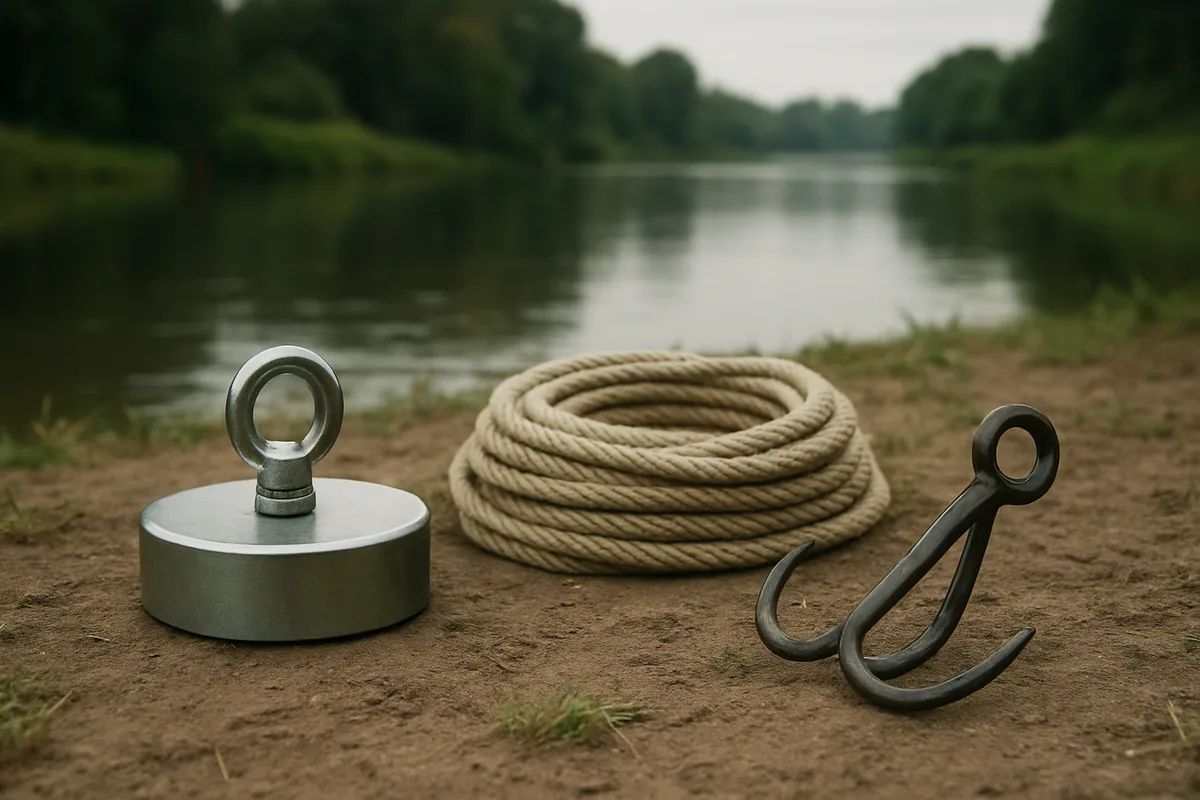
A well-matched setup makes magnet fishing easier to manage at a permitted shoreline, canal, or riverbank. Choose a magnet and rope suited to the water access and the way you expect to retrieve objects. Pack durable gloves and a container so ordinary debris stays contained while you work. Before leaving, inspect the equipment and confirm that access and local rules allow magnet fishing at your chosen site.
Choose the Magnet and Rope
Neodymium fishing magnets come in single-sided and double-sided designs, and their shape affects how the magnetic face meets an object. A magnet attracts ferromagnetic materials such as iron and many steels; it will not attract every metal, including aluminum or copper. The best magnet for magnet fishing depends on the site and retrieval method, not simply on a stated pull rating.
| Design | Orientation | Likely use | Retrieval approach | Limitation |
|---|---|---|---|---|
| Single-sided, back-mounted eye | One active face points away from the attachment point. | Targeting a bottom surface from a bank or dock. | Keep the magnetic face toward the bed as the line is worked. | Contact can be less likely if the magnet lands on its back or approaches an object edge-on. |
| Double-sided, top-mounted eye | Two active faces sit on opposite sides of the magnet. | Vertical drops from a bridge or stable platform. | Lower the magnet so either face can meet an object below. | The top-mounted arrangement may be less convenient for a long, low-angle drag. |
| Double-sided, side-mounted eye | Two active faces are arranged for a more horizontal pull. | Dragging along accessible canal or river bottoms. | Pull the magnet at a low angle so its faces can contact objects during the pass. | It may be awkward where the water edge or casting space requires a vertical drop. |
Secure the rope to the magnet’s designed eye using a suitable knot or rated connector, and seat any supplied locking hardware as directed by its maker. Check that the rope attachment cannot loosen under repeated wet pulls; a strong magnet is only as dependable as its rope connection. Match the design to the bottom access and planned approach rather than choosing by magnet size alone.
Pack Gloves and a Container
Durable gloves help protect hands from rope abrasion during repeated pulls and from rough surfaces on ordinary equipment. Choose a pair that fits closely enough to grip a wet rope and handle the magnet without slipping; check the seams and palms before setting out. Gloves are part of routine kit, not a substitute for care when an object is unsuitable to handle. Bring a sturdy, washable container, such as a lidded bucket or rigid tote, to keep recovered everyday debris together between the water and the place where it will be sorted. If carrying a container is impractical, decide in advance how ordinary scrap will be contained and transported without leaving pieces along the bank. Keep the container stable and accessible, rather than balancing loose finds beside the water.
Inspect Gear and Check Rules
A short pre-trip check can catch equipment problems and prevent an unplanned visit to a restricted site. Check each item before you leave and verify that you have permission for the specific access point.
Basic Retrieval Steps
A careful retrieval begins before the magnet reaches the water: permission and site rules determine whether a location can be used at all. Once those are clear, check the line and attachment, then cast only from an authorized area with people outside its path. Retrieve at a steady pace so changing resistance is noticeable rather than masked by a hard pull. Treat every object as unidentified until it can be assessed without touching anything that may be hazardous.
Choose a Permitted Location
Use this location-check sequence before setting down your magnet fishing gear. A canal bank, river access point, or public path is not automatically open to magnet fishing; permission and conditions can vary by site.
- Identify the landowner or site manager for the exact bank, bridge, or launch point, and ask whether magnet fishing is allowed there.
- Check current local restrictions, waterway rules, and any relevant magnet fishing laws and permits; ask the responsible authority if the wording is unclear.
- Confirm the access boundary, including gates, signs, marked paths, and private land; permission for one area does not extend to adjoining ground.
- Ask about site-specific conditions such as restricted hours, temporary closures, supervised access, or areas where casting is prohibited.
- Keep a note of who granted permission, which location it covers, and any conditions, so the agreed limits remain clear during the visit.
The location check is complete only when the permission applies to the precise casting spot and every relevant restriction or condition is clear. If permission or a rule remains uncertain, do not cast there; seek clarification or choose a location with confirmed authorization.
Secure and Cast the Line
Before casting, examine the rope along its working length for cuts, fraying, or other visible damage, and confirm that its attachment to the magnet is secure. This check is intended to reduce the chance of losing the magnet or line during a pull. A gentle test of the connection should leave it firmly seated, with no visible movement or slipping; if it does not, do not cast. Choose a casting area that is both permitted and clear of people, obstacles, and nearby activity. This gives the line room to travel without crossing another person’s path. Ask anyone nearby to stand well clear of the rope, including its likely arc and the area where it may land; begin only when the space is clear. Cast under control rather than using a forceful, unpredictable swing. Keep the rope managed so it does not wrap around a hand or foot, and direct the magnet only into the authorized area. The cast is complete when the magnet lands within the permitted zone, the line remains unobstructed, and other people are clear of it.
Retrieve and Inspect
Retrieve the line with a steady, even pull, keeping the rope controlled as it comes back. A consistent pace helps you notice changes in resistance that could indicate an object, a snag, or movement in the line. If the resistance changes suddenly, pause instead of adding force; resume only when the line can be moved without an abrupt pull. Do not jerk the rope to make an object move. As an ordinary object approaches, bring it within reach gradually and keep it close to the water or bank until you can assess it. Avoid swinging a loaded line toward yourself or other people. Once the object is visible, take a moment to inspect its shape and condition before deciding whether it is an ordinary find. Mud, corrosion, and attached debris can obscure important details, so do not assume that an unfamiliar item is harmless. Leave any weapon, ammunition, suspected explosive, or other hazardous or unidentified object undisturbed. Do not attempt to detach, clean, open, or carry it; move away from it and contact local authorities, following their directions. For clearly ordinary finds, inspect only what is needed to identify the item without risking contact with sharp edges. A slow return and cautious visual check are the most reliable finish: keep ordinary finds separate from anything uncertain, and stop if a hazard appears.
Common Problems and Adjustments
A retrieval can stall for different reasons: the magnet may be trapped, its connection may shift, or its face may lose contact with an object. Line direction and underwater obstacles can also make a pull inefficient. Each problem calls for a different adjustment, so identify the cause before changing your position or resuming a pull. These magnet fishing techniques focus on controlled adjustments rather than added force.
When the Magnet Snags
A sudden stop, repeated catches at the same point, or a line that will not move with light tension can signal a snag on a branch, railing, or submerged structure. Stop applying force and assess the situation before trying another movement.
- Ease off the pull and let the line settle; a hard tug can tighten a wrap around an obstruction or strain the magnet’s attachment point.
- From a stable position, check the accessible line for cuts, flattened fibers, or abrasion, and look for movement at the visible connection.
- Note where the line enters the water and whether its direction has changed; a new bend may indicate contact with an edge or structure.
- Reassess your position only if access is permitted and the footing remains stable; a small change in line direction may release contact without extra force.
- Resume only when the line and connection appear sound and the magnet moves freely; stop if the snag persists or conditions make the pull unsafe.
A controlled pause gives you a chance to distinguish a temporary catch from a trapped magnet without worsening the strain.
When the Attachment Weakens
A knot that creeps along the rope, frayed fibers, or visible movement where the line meets the magnet means the connection may no longer hold securely. Stop retrieval as soon as you notice any of these changes; do not test the connection with a harder pull. If the magnet is still accessible, bring it in gently only when doing so does not increase strain. Keep suspect gear out of use and separate it from equipment ready for retrieval. Inspect the rope, knot, and magnet connection in good light, checking for cuts, crushed strands, looseness, or deformation. Replace damaged components before another attempt, and retie or reattach sound parts using a secure rope attachment. If you cannot confirm that the connection is reliable, do not cast that setup again.
When the Magnet Slides Off
A magnet can slide off when an object is rounded, tapered, coated with a slick layer, or too narrow for a broad contact area. An angled touch may also leave only an edge of the magnet against the metal, producing less stable contact than a flat face-to-face hold. If the magnet comes free, pause and consider the object’s shape and the direction of the previous approach. Change your position or the approach only where access is permitted and footing is secure; a modest shift may bring the magnet into contact with a flatter surface. Do not compensate by pulling harder, since extra force does not improve the contact angle and may cause the magnet to slip again. If the object remains difficult to engage, leave the attempt rather than forcing a hold.
When the Retrieval Angle Is Poor
A line that pulls sharply sideways or runs beneath a visible edge may indicate that an obstruction is redirecting the magnet’s path. With a poor angle, the magnet can lose contact as it travels, while the rope bears against a structure instead of drawing the object toward you. Pause and reduce tension before changing position. Where access is permitted, a small move along the bank can alter the line direction; keep your footing stable and avoid pulling from a position that places the rope across a person or obstacle. Try a gentle retrieval from the revised angle and watch for smooth movement rather than a sudden increase in resistance. Stop if the new line still bends tightly, the magnet remains blocked, or the rope or attachment takes excessive strain. A clear, low-strain line is the best indication that an adjusted approach is working.
Responsible Recovery
Responsible magnet fishing includes respecting access rights, following site-specific restrictions, and dealing with recovered material without creating a new problem. Permission can depend on who controls the bank, waterway, or land beside it, so do not assume that public access allows magnet fishing. Ordinary scrap should be kept out of the water and handled through suitable local disposal arrangements. If an object is hazardous or cannot be confidently identified, leave it where it is and seek guidance from the appropriate local authority.
Respect Access and Site Rules
Get permission before entering private land or magnet fishing from a bank, bridge, dock, or managed waterway. The landowner may control access to the shoreline, while a separate waterway manager or public authority may set rules for activity on the water; permission from one does not automatically cover the other.
Stay within the boundaries you have been authorized to use. Fences, gates, signs, restricted zones, and temporary closures can mark limits that apply even when the water itself looks accessible. Follow site-specific conditions, including restrictions on fishing, access hours, or areas reserved for maintenance and navigation.
Check local regulations and posted notices before you begin, and ask the relevant landowner or site manager if the rules are not clear. Requirements vary between locations, so do not rely on another site’s permission or a general assumption about public access. If you cannot confirm that you may enter and fish there, stop and choose a location where authorization is clear.
Dispose of Ordinary Debris
Keep plainly ordinary debris separate from reusable personal equipment, and take recovered scrap away rather than leaving it beside the water. Use local waste arrangements for each material:
- Set aside clearly ordinary metal scrap, such as a rusted bracket, for a recycling facility that accepts ferrous metal.
- Keep cans and other familiar packaging together, and use a local recycling stream only if its rules accept those materials.
- Contain small pieces such as wire offcuts or metal fragments in a sturdy container so they do not scatter during transport.
- Separate reusable personal items, such as your rope or magnet, from unwanted debris; do not treat them as waste unless you intend to discard them.
Check local collection guidance before using a household bin or recycling point, since accepted materials and drop-off options differ. Leave the bank and access area tidy, and never put recovered debris back into the water.
Leave Hazardous Finds Undisturbed
Leave any hazardous or unidentified object exactly where it is. Do not touch, move, open, clean, or attempt to identify it at close range; an unfamiliar object can pose a risk even when it is corroded, partly buried, or difficult to recognize.
Move away from the object without approaching it again, and keep other people clear by warning them from a safe distance. Do not ask anyone to handle or inspect it. This applies to suspected weapons, ammunition, explosives, and any other object whose condition or purpose is uncertain.
Contact the appropriate local authority for guidance and describe the location and what you observed without returning to the object. If there appears to be immediate danger, contact local emergency services. Follow the authority’s directions and do not resume activity near the find until they say the area is clear. The practical rule is simple: leave uncertain objects untouched, create distance, and let the appropriate authority decide what happens next.